
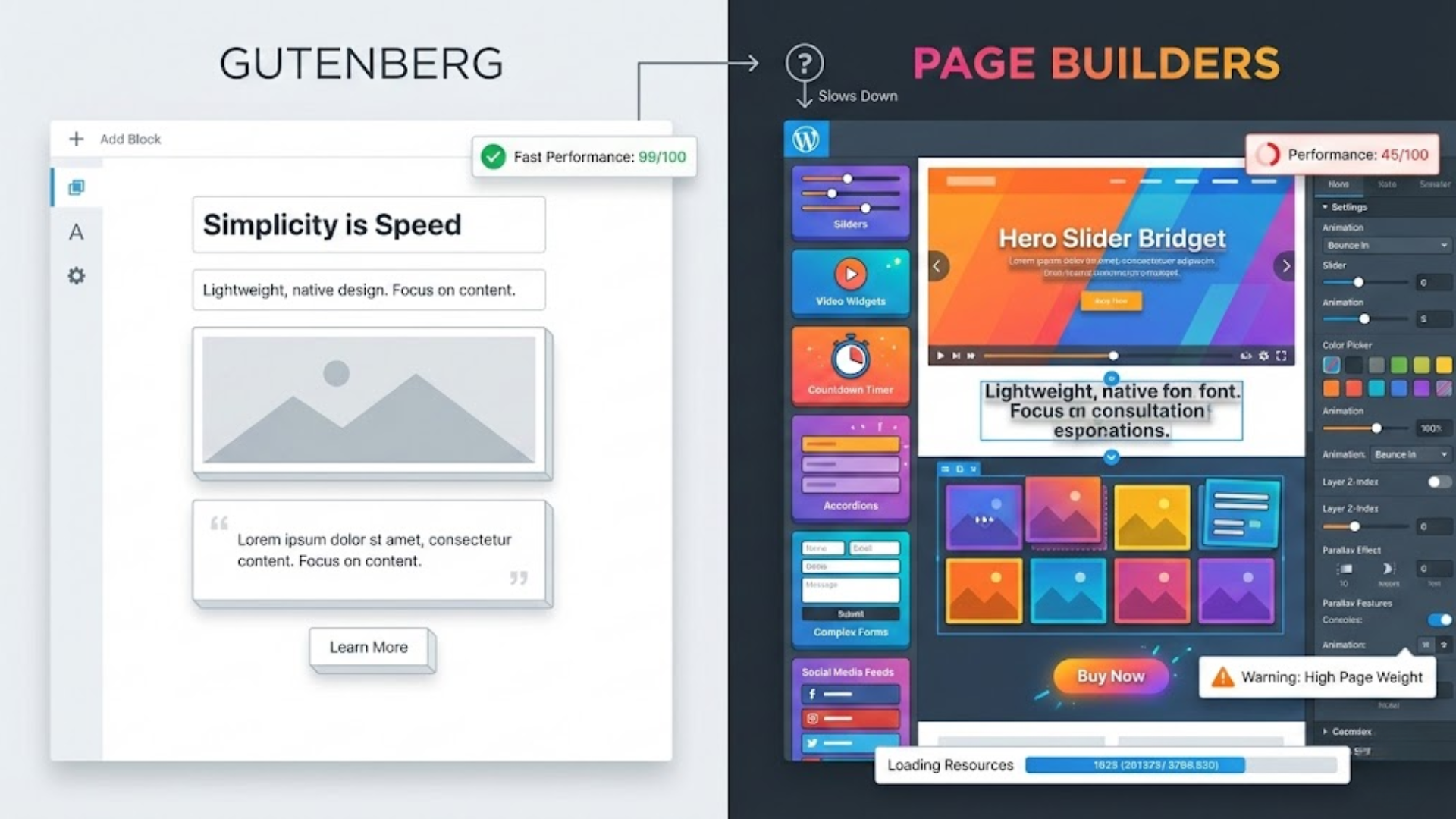
The web design industry has been lying to you.
For years, agencies have sold business owners on “drag-and-drop” page builders. They promised that these tools were the future because they made design easy. And for a while, they were right. Tools like Elementor and Divi made it easy to build websites quickly.
But that ease comes with a hidden cost.
The developer enjoys an easy “drag-and-drop” experience, but the business owner pays the price: compromising speed, SEO rankings, and revenue.
At extendedIDEA, we recently made a controversial decision. We stopped using traditional page builders. Instead, we switched to Custom Gutenberg Blocks built with React.
Here is why we did it—and why your business needs to care.
The “Bloat” Problem: What Happens Behind the UI?

This “overpacking” happens in your website’s code.
Imagine that you are packing for a weekend trip.
- Gutenberg (Native Blocks) is like packing a small suitcase with exactly what you need. It is light, fast, and efficient.
- Page Builders are like packing your entire wardrobe, your winter coat, and your kitchen sink—just in case you might need them
This “overpacking” happens in your website’s code.
When a developer drags a button onto the page using a page builder, he is not adding just the button. The builder adds hundreds of lines of code to style the button, align it, and even add animation code every time.
The “Box Inside a Box” Issue
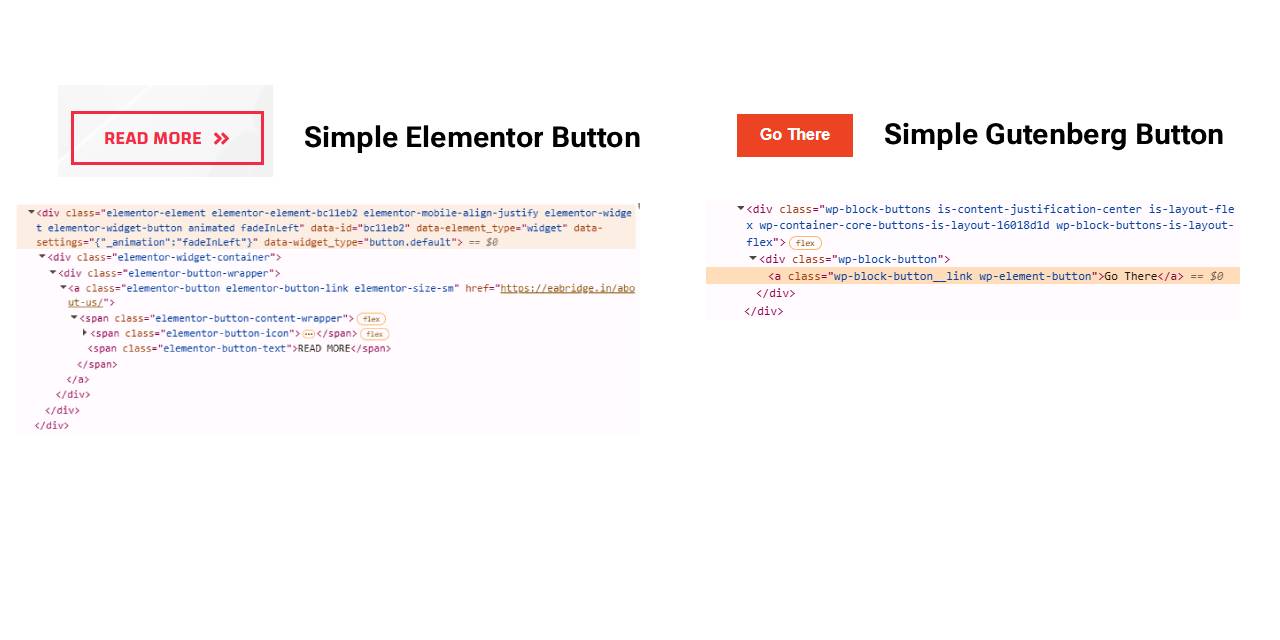
In technical terms, this creates a massively increased DOM size.
Think of your website structure like shipping boxes.
- Clean Code: You just place the product in a box. Thats it.
- Page Builders: The product is placed in a box, which is inside another box, and it is put inside a crate, and the whole is inside a container
The browsers (Chrome, Safari) have to navigate through all those boxes before they can show your content to the customer. This delay frustrates users and confuses Google.
Speed & Core Web Vitals: The Google Tax
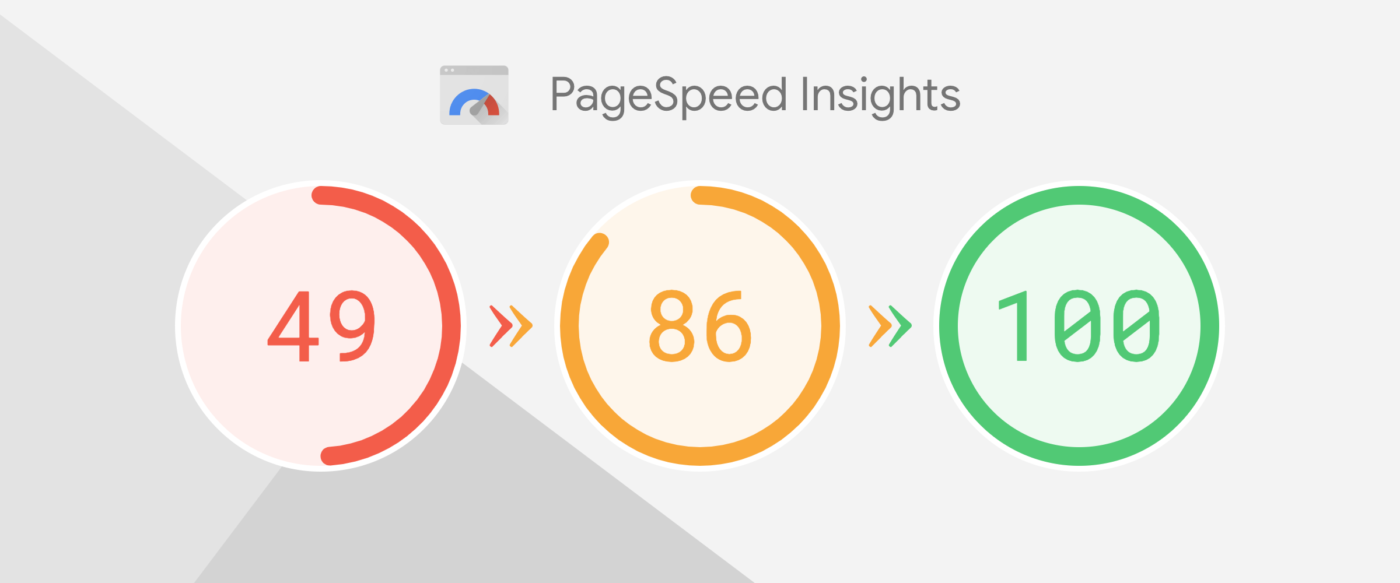
Google does not care how easy it was to build your site. It is concerned only with the user experience
In 2021, Core Web Vitals was introduced by Google. These are strict metrics that measure:
- Loading: How fast the main content appears.
- Interactivity: How fast the site reacts when you click a button.
- Visual Stability: Does the layout jump around?
Page builders struggle here. Because they inject heavy JavaScript files (the scripts that make things move), they delay the moment your site becomes interactive.If your site takes 3 seconds to load instead of 1 second, 53% of mobile users are already gone. That is not just a technical stat; that is lost revenue. We call this the Google Tax.
Custom React Blocks: The “extendedIDEA” Approach

This is where we differ from the average agency.
We don’t just use the standard blocks that come with WordPress. We engineer Custom Blocks using React.
React is the same technology Facebook and Netflix use. It works really quickly. We get the best of both worlds by creating custom blocks:
- Design Freedom: We can build any layout your designer can imagine.
- Zero Bloat: We only write the code necessary for that specific feature.
If you need a “Services Slider,” we can code a lightweight slider. We don’t install a massive plugin that slows down your whole site.
Comparison: Gutenberg vs. Page Builders
Here is the hard data on how they stack up.
| Feature | Custom Gutenberg Blocks | Page Builders (Divi/Elementor) |
| Page Speed | ⚡ Blazing Fast (90+ Score) | 🐢 Slow (Often <50 Score) |
| Code Quality | Clean, Semantic HTML | Bloated “Div Soup” |
| Mobile Experience | Native & Responsive | often Heavy & Laggy |
| Security | High (Fewer Plugins) | Moderate (Plugin Dependencies) |
| Future Proof? | ✅ Yes (Part of WordPress Core) | ❌ No (Reliant on 3rd Party) |
When Should You Use a Page Builder?
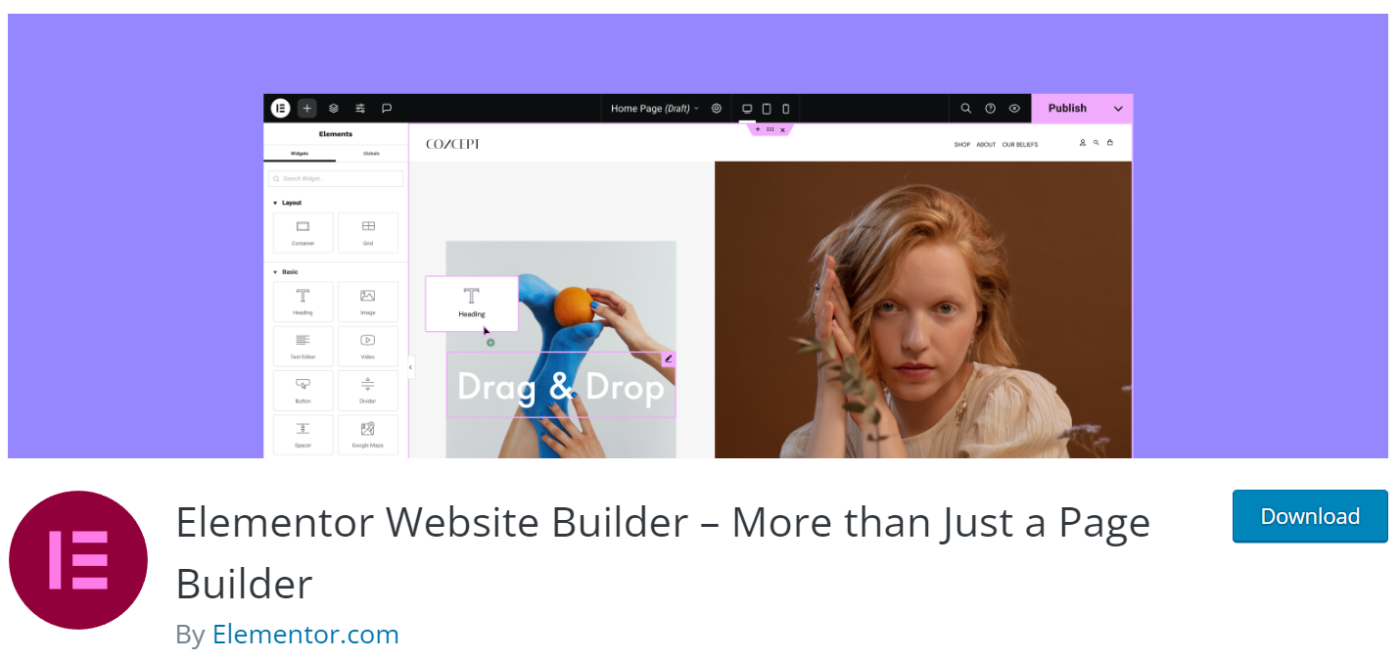
We want to be fair. Page builders aren’t “evil.” They have a place.
If you are a hobbyist, a blogger starting out, or a small local shop with a budget under $500, a page builder is fine. You need something cheap and easy, and you don’t need to rank nationally.But if you are a growth-focused business, relying on a page builder is a strategic error. You cannot compete in a high-performance market with a low-performance website.
Conclusion: Stop Building Websites for 2015
The web has changed. In 2026, speed is a necessity rather than a luxury.
You don’t need to run a race in heavy boots. Don’t ask your business to run with a heavy website.
At extendedIDEA, we build for performance. We build for Google. We build for sales.
Is your website failing the speed test?
Most business owners don’t even know their site is slow. We can tell you the truth in 5 minutes.
Click here to request a Free Code Weight Audit. We will show you exactly what is slowing you down and how to fix it.